
Understanding Terms: Puppy Learning
Imprinting and Neuroplasticity
Imprinting is a rapid learning process that occurs during a critical developmental window from 2 weeks to about 16 weeks, while neuroplasticity refers to the brain’s lifelong ability to change and adapt. In puppies, neuroplasticity shapes how they form connections and associations based on their emotional experiences—positive, negative, or neutral. Since they are new to their world, their associations are few and mostly emotionally positive or neutral. As a puppy encounters different situations, its emotional responses help establish neural pathways, which repetition reinforces. This process creates a learning history that significantly influences a puppy’s behavior toward people, places, dogs, environments, and more.
Puppy Developmental Stages
Prenatal stage
During this stage, prenatal stress experienced by the mother can greatly impact the developing puppies. Choosing a reputable breeder who ensures the mother is emotionally and physically healthy can positively affect a puppy’s development.
Neonatal Period (Birth to 2 Weeks)
Puppies are entirely dependent on their mother for care, feeding, and elimination. They feed frequently and need to maintain a healthy weight and temperature
Transition Period (2-5 Weeks)
Sensory Period. They can see for the first time and begin to hear your voice. Loud sounds can frighten them when they experience their surroundings for the first time. Early Neurological Stimulation (ENS) is vital for development at this stage. They start to become mobile and may begin to explore their environment by crawling to Mom’s milk and for huddle rest. During this Period, puppies grow baby teeth and begin weaning toward the end of this process.
Peer Social Skills (5-8 Weeks)
Puppies are about to wean off mother’s milk and start solid food. They use their voice, move around, and sleep a lot. During this time, they learn from their mother and siblings what play is acceptable. If the litter and mom are well-adjusted; not harming the puppy, the puppy should stay with the litter during 7-8 weeks old.
Prime Socialization Window (8-16 Weeks)
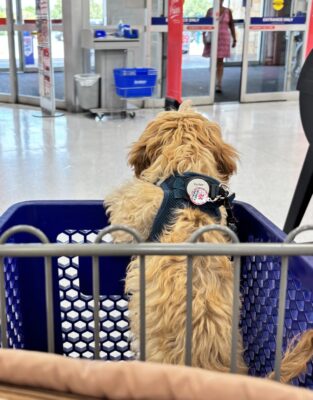
This is the most critical socialization period. Weeks 8-11 are extra-sensitive for puppies, and traumatic experiences can have a lasting negative impact. Focus on positive exposure to various stimuli, including other dogs, people, objects, and experiences. Introduce new stimuli gradually, and keep each experience positive. Don’t force – allow space and agency, especially when on a lead. Watch their environment and how they respond, and pair new encounters with food rewards and verbal praise to build confidence and prevent fear responses. Fetch Worthy follows AVSAB recommendations for safe, unvaccinated puppy socialization with tips from Psychology Today.com.
Juvenile Period (17 Weeks Onwards)
Puppies grow rapidly, lose their baby teeth, gain better bladder control, and mature mentally and physically to prepare for sexual maturity. Growing pains may occur during this time, and potty training should be wrapping up with 100% success for bigger dogs; smaller dogs may need a couple of weeks to be 100% accident-free.
Adolescence and the Second Fear Period (6-14 Months)
During this time, puppies may experience heightened fear responses to things they haven’t before. Try to avoid stressful situations or negative confrontations on walks, especially with other dogs. Keep a mental note of what they react negatively to, revisit it using positive reinforcement, and reward any neutral or positive response. Negative experiences can be harder to overcome, so keep exposing them gradually and give them physical and emotional space to process without force. A tip: gamifying training and interactions works better than a rigid style, and bonding matters at this stage to overcome fear, so a strong “check-in” eye-contact game helps.
Adult Stage ( 2 years)
Smaller dogs can reach adulthood after a year, and up to 2 years, while big dogs are usually around the 2-year mark. Emotionally, this can take another year, but most dogs begin to mature at the 2-year mark. This is when all the training comes together and can become more fluent and reliable. So do not give up before then!
Important Notes for Puppy Parents
Ensure early experiences are positive: Avoid overwhelming your puppy during the prime socialization window by giving them choices and maintaining a safe environment.
- Supervise interactions: As puppies explore their world, keep them monitored to prevent traumatic experiences; learn body language so you can understand how they might be feeling.
- Consider timing: Remember the second fear period can be something at home, like a vacuum, or can be a bad dog encounter – keep notes and be proactive, as it may require more effort to instill positive associations with physical and emotional space, rewarding neutrality.
By understanding these key stages of development and the impact of imprinting and neuroplasticity, you can help guide your puppy toward becoming a well-adjusted adult dog. Things or concepts.

Your Austin Dog Trainer, Shelly Haines, also offers dog training online.
Fetch Worthy Dog Training by Shelly Haines, VSA-CDT, FFCP, offers private dog training in the South Austin area & dog training online at your convenience.